8 Best Organic Mulch for Professional Landscaping
The smell of damp earth and decomposing lignin signals a high functioning rhizosphere. When you press your palm against the soil, you should feel a cool, consistent moisture level that maintains the turgor pressure of the plant canopy. Achieving this balance requires the best mulch for landscaping to act as a thermal regulator and moisture barrier. Professional grade mulching is not merely aesthetic; it is a calculated intervention in soil physics. By selecting materials with specific carbon to nitrogen ratios, a land manager can manipulate the soil temperature and suppress weed seed germination through light exclusion. A well mulched bed reduces evaporation by up to 35 percent and prevents the crusting of the soil surface. This ensures that oxygen continues to reach the root zone, supporting aerobic microbial activity. The goal is to create a stable environment where the soil moisture meter consistently reads in the optimal range for the specific genus being cultivated. Proper selection prevents the physiological stress that leads to early senescence or vascular collapse during peak summer heat.
Materials:
Professional landscaping requires a substrate that integrates into a friable loam without causing nutrient lockout. The following eight organic mulches are categorized by their chemical impact on the soil profile.
- Arborist Wood Chips: These possess a high carbon to nitrogen (C:N) ratio, often exceeding 100:1. They are ideal for established woody perennials where long term fungal dominance in the soil is desired.
- Pine Bark Nuggets: With a pH range of 3.4 to 4.5, these are essential for acid loving species. They provide excellent macroporosity for drainage.
- Pine Straw: This material offers a high surface area for moisture interception and maintains an acidic rhizosphere.
- Leaf Mold: This is a biologically active mulch with a C:N ratio of approximately 30:1. It provides immediate available carbon for earthworms.
- Straw (Seedless): Used primarily in vegetable production, it reflects light to cool the soil surface.
- Composted Bark: This material has a lower C:N ratio (30:1 to 50:1) and provides a steady release of micronutrients.
- Buckwheat Hulls: A fine textured mulch with a neutral pH, perfect for small scale ornamental beds.
- Salt Hay: This does not contain weed seeds and is resistant to compaction, maintaining high gas exchange rates.
The ideal soil beneath these mulches should be a friable loam with a Cation Exchange Capacity (CEC) between 15 and 25 meq/100g.
Timing:
The application of mulch must align with the biological clock of the plant and the local climate. In Hardiness Zones 4 through 6, mulch should be applied after the first hard frost to insulate the ground and prevent the freeze-thaw cycles that cause root heaving. In Zones 7 through 10, application should occur in early spring, before the soil temperature reaches 65 degrees Fahrenheit, to preserve the moisture accumulated during winter rains.
During the transition from vegetative to reproductive stages, plants demand higher transpiration rates. Mulching during this window ensures that the hydraulic lift within the xylem remains uninterrupted. Applying mulch too early in spring can trap cold in the soil, delaying the "Biological Clock" by slowing root metabolism and nutrient uptake. Aim for a window approximately two weeks after the last predicted frost date for your specific zip code.
Phases:

Sowing
When sowing seeds, mulch must be fine textured or pulled back to allow for hypocotyl emergence. A layer of 0.25 inches of fine compost can protect the seeds without blocking the light required by certain species.
Pro-Tip: Use light colored mulch for cool season crops to maximize albedo. This manages phototropism by ensuring the emerging seedling receives adequate light from all angles, preventing leggy growth.
Transplanting
When moving a plant from a container to the field, clear a circle 12 inches in diameter around the planting hole. Install the plant so the root flare is visible, then apply mulch up to the edge of the root ball.
Pro-Tip: Avoid "mulch volcanoes" against the trunk to prevent auxin suppression. Contact between moist mulch and bark can trigger adventitious root growth or rot, disrupting the plant's hormonal balance and structural integrity.
Establishing
During the first 60 days, the plant is establishing its relationship with soil biota. Maintain a mulch depth of 2 to 3 inches to support mycorrhizal symbiosis.
Pro-Tip: A stable moisture level provided by mulch encourages the colonization of roots by beneficial fungi. These fungi extend the reach of the root system, increasing the uptake of phosphorus and water through a massive surface area expansion.
The Clinic:
Physiological disorders often stem from improper mulching techniques or material choices.
- Symptom: Yellowing of lower leaves (Chlorosis).
- Solution: This often indicates Nitrogen Immobilization. High carbon mulches like fresh sawdust can pull nitrogen from the soil to aid decomposition.
- Fix-It: Apply a high nitrogen fertilizer with an NPK ratio of 10-0-0 (such as blood meal) to the soil surface before re-mulching.
- Symptom: Sour or fermented odor from the mulch bed.
- Solution: Anaerobic decomposition (Sour Mulch). This occurs when mulch is too deep or compacted, producing acetic acid.
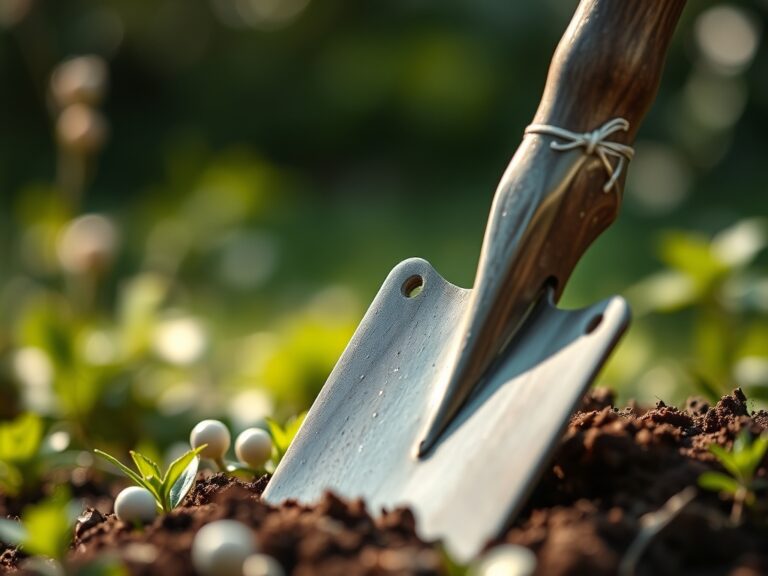
- Fix-It: Use a hori-hori knife to fluff the mulch and incorporate oxygen. Maintain a maximum depth of 3 inches.
- Symptom: Hydrophobic soil (Water beads on the surface).
- Solution: Fungal matting or extreme desiccation.
- Fix-It: Break the surface tension by raking the mulch and applying a surfactant or heavy irrigation to re-wet the organic matter.
Maintenance:
Precision maintenance is the difference between a surviving landscape and a thriving one. Monitor the soil moisture at a depth of 4 inches using a digital meter. Most woody ornamentals require 1.5 inches of water per week at the drip line. Use bypass pruners to remove any suckers that emerge from the base of the plant, as mulch can sometimes stimulate dormant buds.
Annually, check the depth of the mulch. Organic matter decomposes at a rate of approximately 0.5 to 1 inch per year. Replenish the layer in the autumn to maintain the desired thermal buffer. If the mulch has formed a "crust" due to fungal mycelium, use a rake to break it up; this ensures that water and oxygen can penetrate the rhizosphere.
The Yield:
When harvesting flowers or fruit from a mulched landscape, timing is critical for cellular integrity. Harvest in the early morning when turgor pressure is at its peak. Use a sharp, sterilized blade to make clean vascular cuts, preventing the entry of pathogens. For woody stems, a 45 degree angle cut increases the surface area for water uptake post-harvest. Immediately submerge the cut ends in 40 degree Fahrenheit water to slow the rate of respiration and preserve "day-one" freshness. This rapid cooling halts the metabolic processes that lead to wilting and nutrient degradation.
FAQ:
How deep should I apply mulch?
For most professional applications, a depth of 2 to 3 inches is optimal. This provides sufficient weed suppression and moisture retention without limiting gas exchange between the soil and the atmosphere.
Can mulch change my soil pH?
Yes. Pine bark and needles will gradually lower pH over several years. Conversely, hardwood mulches tend to have a neutral to slightly alkaline effect as they decompose and release calcium into the soil profile.
What is the best mulch for vegetable gardens?
Straw or shredded leaves are superior for vegetables. They have a faster decomposition rate, which contributes organic matter to the soil annually, and they do not cause the long term nitrogen tie-up associated with wood chips.
Should I use landscape fabric under mulch?
Professionals generally avoid fabric. It restricts the movement of earthworms and prevents the integration of organic matter into the soil. It also becomes a substrate for weed roots to anchor into as the mulch breaks down above it.