7 Storage Steps to Build a Seed Care Workshop
The scent of dry paper envelopes and the faint click of glass vials mark the ritual of seed preservation. A dedicated workshop transforms casual collection into systematic conservation, ensuring germination rates remain above 85 percent even after five years. The steps for building a garden workshop for seed storage begin with climate control, progress through spatial organization, and culminate in record-keeping protocols that honor each cultivar's genetic legacy. This seven-phase approach integrates architectural planning with biological necessity, creating a space where temperature stability and humidity regulation protect embryonic tissue from oxidative stress.
Materials
Infrastructure requires three distinct zones: processing, short-term holding, and long-term cryogenic storage. Processing tables demand non-porous stainless steel surfaces that resist bacterial colonization and simplify sterilization. Install dehumidifiers rated for 50-pint daily capacity in spaces exceeding 200 square feet. Silica gel desiccant packets in 10-gram units maintain relative humidity between 20 and 30 percent within sealed containers.
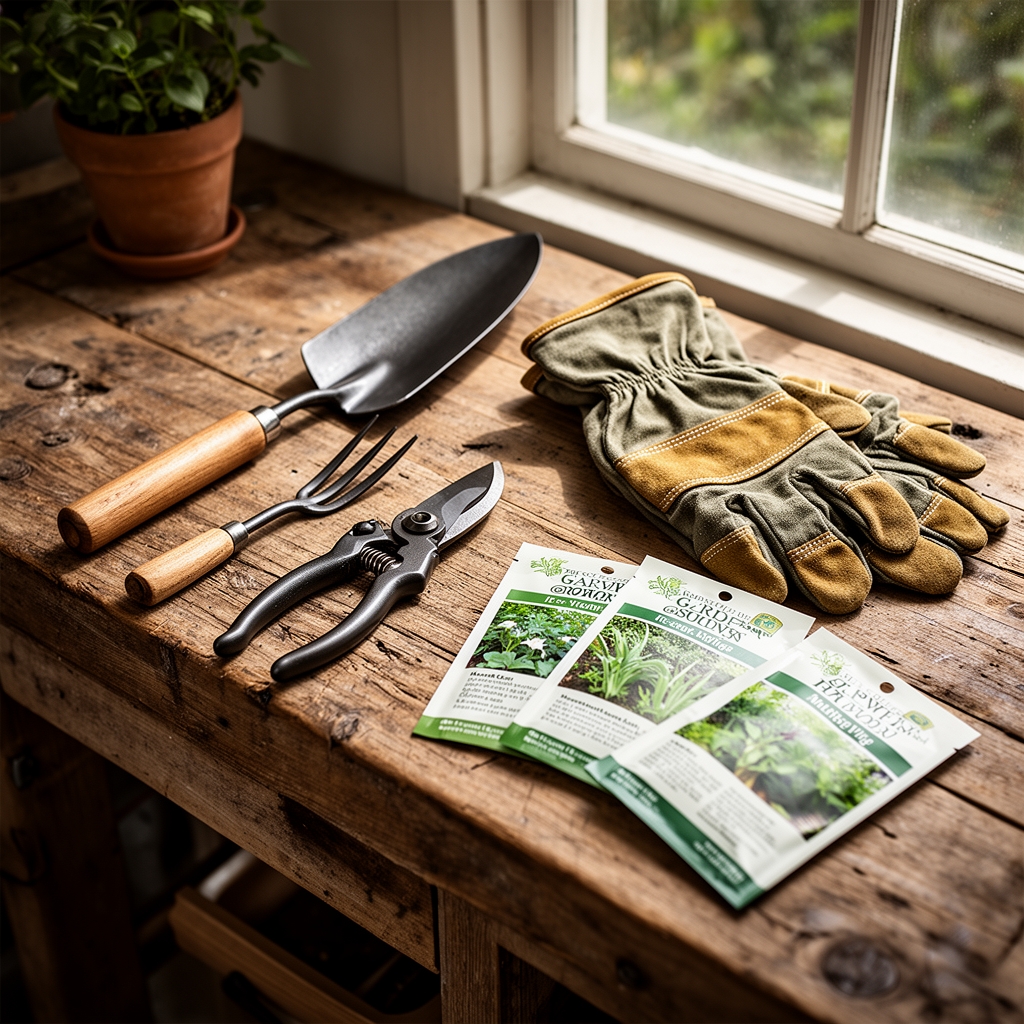
Soil amendments for growing out test samples include balanced 4-4-4 organic meal derived from feather, bone, and kelp. This ratio supports root development without excessive vegetative growth that masks genetic instability. Maintain substrate pH between 6.2 and 6.8 to optimize cation exchange capacity. Mycorrhizal fungi inoculants at 150 propagules per gram enhance phosphorus uptake during germination trials. Perlite and vermiculite in 2:1 ratio improve aeration while buffering moisture fluctuations in test flats.
Archival supplies include acid-free coin envelopes, laboratory-grade freezer vials with O-ring seals, and thermal printers using fade-resistant labels. Avoid glassine envelopes for Brassicaceae seeds, as static electricity damages trichomes on seed coats. Aluminum foil laminate bags with triple-layer construction exclude light and oxygen for decade-long storage.
Timing
Construction timing aligns with USDA Hardiness Zones and regional humidity patterns. Zones 3 through 5 require insulated walls with R-30 rating and foundation heating cables to prevent freeze-thaw cycles from November through March. Zones 8 through 10 benefit from reflective roof coatings and exhaust fans triggered at 78 degrees Fahrenheit.
Begin seed collection 14 days after physiological maturity, identified by color shift from green to tan in capsules. Schedule processing within 48 hours to arrest enzymatic activity. Conduct germination trials twice annually: six weeks before last spring frost and eight weeks before first fall frost. This cadence reveals storage-related viability decline before genetic reserves dwindle below recovery thresholds.
Phases
Planning and Site Preparation
Select north-facing locations to minimize solar heat gain. Excavate 4 inches deep and install vapor barriers beneath concrete slab foundations. Run dedicated 20-amp electrical circuits for refrigeration units and climate control. Insulate walls with closed-cell foam to prevent moisture infiltration and maintain internal temperature at 38 to 42 degrees Fahrenheit.
Pro-Tip: Install threshold ramps with brush seals to exclude arthropods, particularly seed-boring beetles in Coleoptera families.
Climate System Installation
Mount dual-zone temperature controllers with 0.1-degree precision. Position sensors 48 inches above floor level, away from direct airflow. Install HEPA filtration to remove fungal spores, targeting 0.3-micron particle capture. Humidity sensors require monthly calibration using saturated salt solutions at known relative humidity values.
Pro-Tip: Configure backup battery systems providing 72 hours of refrigeration during power failure to prevent auxin degradation in tropical species seeds.
Inventory and Labeling Infrastructure
Establish digital databases linking QR codes to collection metadata: provenance coordinates, maternal plant health scores, and initial germination percentage. Print labels using thermal transfer technology at 300 dpi resolution. Record cation exchange capacity and organic matter content of source soil to predict storage longevity.
Pro-Tip: Photograph seed lots under standardized lighting at 5000K color temperature to document coat integrity and detect fungal contamination invisible to unaided vision.
Troubleshooting
Symptom: Germination rates decline 15 percent annually.
Solution: Reduce storage temperature to 34 degrees Fahrenheit. Test for lipid peroxidation using thiobarbituric acid assays. Re-dry seeds to 5 percent moisture content using desiccant chambers.
Symptom: White mycelial growth on seed surfaces.
Solution: Isolate affected lots immediately. Surface-sterilize remaining inventory with 10 percent sodium hypochlorite solution for 90 seconds. Improve air circulation and reduce humidity below 25 percent.
Symptom: Seeds exhibit radicle protrusion without subsequent growth.
Solution: Indicates premature germination from moisture exposure. Discard lot. Audit container seals and desiccant replacement schedules.
Symptom: Rodent gnaw marks on packaging.
Solution: Install ultrasonic deterrents at 32 kHz frequency. Seal wall penetrations with copper mesh. Elevate storage containers 18 inches above floor on wire shelving.
Maintenance
Replace silica gel every 90 days or when indicator crystals shift from blue to pink. Vacuum HEPA filters monthly and replace cartridges biannually. Calibrate temperature probes quarterly using NIST-traceable standards in ice-water slurry and boiling water. Apply 1 inch of water to test seedlings weekly, delivered through capillary mat systems to prevent damping-off.
Inspect door seals semiannually for compression set. Tighten hinge bolts and lubricate with food-grade silicone. Monitor electricity consumption; increases above 8 percent baseline suggest refrigeration compressor decline requiring immediate service.
FAQ
How cold should seed storage be?
Maintain 38 to 42 degrees Fahrenheit for orthodox seeds. Recalcitrant tropical species require 50 to 55 degrees to prevent chilling injury.
What humidity level prevents mold?
Target 20 to 30 percent relative humidity. Below 15 percent causes desiccation cracking in large-seeded legumes.
How long do stored seeds remain viable?
Tomatoes retain 90 percent viability for seven years. Alliums decline to 50 percent after two years. Test annually after year three.
Can I store seeds in a standard refrigerator?
Avoid appliances with automatic defrost cycles. Temperature fluctuations exceeding 5 degrees damage cellular membranes.
Do seeds need light during storage?
No. Exclude all light to prevent premature phytochrome activation and energy reserve depletion.