10 Detailed Ways How to Install a Lawn Sprinkler System
The scent of damp, mineral-rich earth signals a healthy rhizosphere, but maintaining that state requires precision engineering. When grass blades lose turgor pressure, they fold and take on a dull, bluish-gray hue, indicating cellular dehydration. To prevent permanent wilting point stress, you must master how to install a lawn sprinkler system with surgical accuracy. This process involves more than burying plastic; it is the construction of a subterranean circulatory system designed to deliver consistent hydration across varying topographies. Proper installation ensures that every square inch of turf receives the exact millimetric depth of water required to facilitate nutrient uptake through the roots. By automating this delivery, you regulate the plant's metabolic rate and prevent the erratic growth cycles caused by manual overwatering or drought. Success depends on calculating static pressure and flow rates before the first shovel hits the dirt.
Materials:

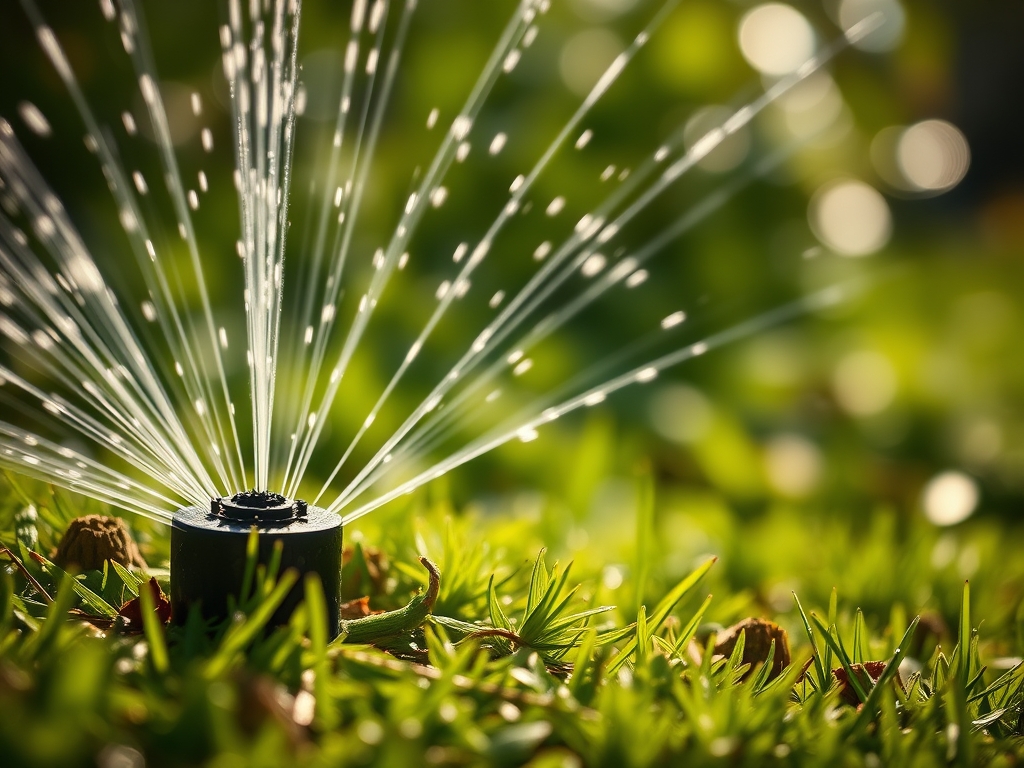
A successful installation begins with understanding the substrate. For a **friable loam** with a **pH of 6.5 to 7.0**, the soil structure allows for optimal water infiltration and gas exchange. If your soil has a high clay content, the Cation Exchange Capacity (CEC) will be high, requiring slower application rates to prevent runoff. You will need **Schedule 40 PVC or high-density polyethylene (HDPE) piping** to withstand ground shifting. For the establishment phase, ensure you have a starter fertilizer with an **NPK ratio of 10-20-10** to promote vigorous root elongation. Essential hardware includes a **backflow preventer**, a **programmable logic controller**, and **gear-driven rotor heads** for large spans or **pop-up spray heads** for tight perimeters. Use a **soil moisture meter** to calibrate the system once active.
Timing:
Installation should occur when the ground is workable but before the peak metabolic demands of mid-summer. In Hardiness Zones 4 through 7, the ideal window is late spring after the final frost date has passed and soil temperatures consistently hit 55 degrees Fahrenheit. This timing aligns with the "Biological Clock" of cool-season grasses, which transition from winter dormancy to active vegetative growth. Installing during this window allows the turf to recover from trenching stress before the heat of July triggers high evapotranspiration rates. In southern Zones 8 through 11, early autumn is preferable to avoid the extreme thermal stress that can inhibit root re-establishment in disturbed soil.
Phases:

Sowing and Site Preparation
Begin by flagging the location of every head to ensure "head-to-head" coverage, meaning the spray from one nozzle reaches the base of the next. Excavate trenches to a depth of 8 to 12 inches to stay below the freeze line and avoid damage from future aeration.
Pro-Tip: Maintaining a consistent trench depth prevents "low head drainage," where water settles in the pipes and causes anaerobic conditions in the soil. This prevents the buildup of hydrogen sulfide which can kill beneficial aerobic bacteria.
Transplanting and Component Integration
Install the valve manifold in a central location. Connect the lateral lines to the main line using swing pipe or funny pipe to provide flexibility. This prevents the main line from cracking if a heavy mower rolls over a sprinkler head.
Pro-Tip: Use Teflon tape on all threaded connections to ensure a watertight seal. This maintains high hydrostatic pressure, ensuring that nozzles operate at their rated PSI to achieve the intended droplet size for uniform distribution.
Establishing the System
Flush the lines with water before installing the nozzles to clear out construction debris. Once the heads are set, backfill the trenches and tamp the soil firmly to eliminate air pockets around the root zone.
Pro-Tip: Firmly tamping the soil restores capillary action. Without this contact, roots cannot bridge the gap between the undisturbed soil and the trench, leading to localized "hot spots" of dead grass due to poor moisture migration.
The Clinic:
Physiological disorders often mimic mechanical failures. If you observe Nitrogen chlorosis, characterized by a general yellowing of older blades, the system may be leaching nutrients due to over-saturation.
Symptom: Localized brown patches despite regular watering.
Solution: Check for "donut" patterns indicating a clogged nozzle or a head that has settled too low, disrupting the spray trajectory.
Symptom: Fungal lesions or "Dollar Spot" on the leaf blade.
Solution: Shift irrigation cycles to the pre-dawn hours (4:00 AM to 6:00 AM). This reduces the duration of leaf wetness and limits the germination of fungal spores.
Fix-It: If the lawn shows iron deficiency (interveinal chlorosis in new growth), check the soil pH. High alkalinity can lock up iron; applying a chelated iron supplement through a fertigation system can bypass this soil-binding issue.
Maintenance:
Precision is the hallmark of a professional. Most turfgrass species require 1.0 to 1.5 inches of water per week, delivered in two deep sessions rather than daily light mists. Use a soil moisture meter to verify that water is penetrating 6 inches into the profile. Annually, use a hori-hori knife to cut away encroaching thatch and grass from the perimeter of the sprinkler heads. In the autumn, use a high-volume air compressor to "blow out" the lines, removing all standing water to prevent ice expansion from fracturing the PVC walls. Monitor the controller and adjust for seasonal changes in the photoperiod to prevent wasted resources during periods of slowed plant metabolism.
The Yield:
While a lawn is not a traditional crop, its "yield" is measured in biomass density and carbon sequestration. A properly irrigated lawn can be 15 degrees cooler than bare pavement through the process of transpirational cooling. For those incorporating clover or herbal leys, the "harvest" involves periodic mowing to a height of 3.5 inches. This height encourages deeper rooting and provides enough leaf surface area for maximum photosynthesis. If you are growing a "bee lawn," time your irrigation to occur after the flowers have closed for the day to avoid washing away nectar and pollen.
FAQ:
How do I calculate my home water pressure?
Attach a pressure gauge to an outside hose bib. Ensure all other water sources are off. A standard residential system usually operates between 40 and 60 PSI. If pressure exceeds 80 PSI, install a pressure regulator to prevent component failure.
What pipe size should I use for the main line?
Most residential systems utilize 1-inch Schedule 40 PVC for the main line and 3/4-inch for lateral lines. This sizing maintains optimal flow velocity and minimizes friction loss, ensuring heads at the end of the line have sufficient pressure to pop up.
How many sprinkler heads can I put on one zone?
This depends on your Gallons Per Minute (GPM) capacity. Total the GPM requirements of your chosen nozzles. If your home provides 10 GPM, the sum of the nozzles on one circuit should not exceed 8 GPM to allow a safety margin.
Why is my sprinkler system leaking when turned off?
This usually indicates a failing valve diaphragm or debris trapped in the valve seat. If the leak is at the lowest head in the zone, it is "low head drainage." Solve this by installing check valves in the heads to hold water in the pipes.